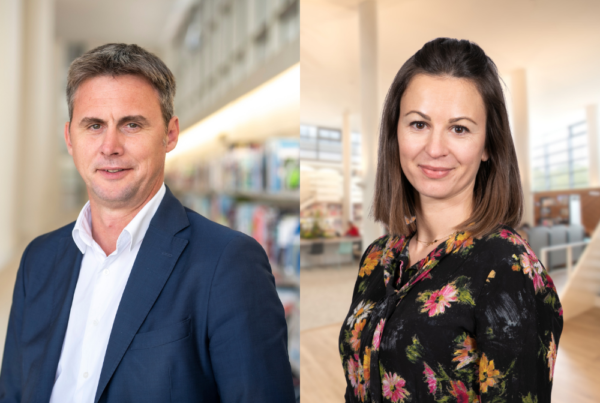

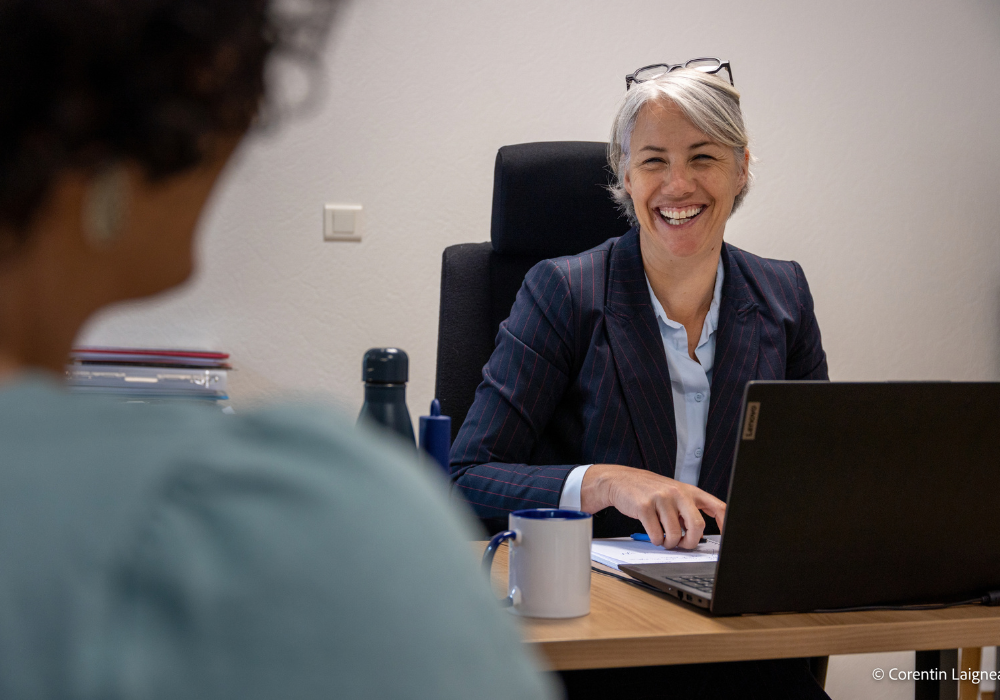
SAPRENA, an inclusive, cooperative, and mission-driven company based in Bouaye, views inclusion as a driver of development. As a sponsor of Audencia’s “Entrepreneurship for the Common Good” Chair, it works alongside the Audencia Foundation to foster dialogue among research institutions, businesses, and local communities. Its CEO, Alexandra Miailhe, discusses the significance of this commitment and its expected impact.
Why is it important for SAPRENA to support Audencia’s chairs?
Alexandra Miailhe: The social, environmental, and economic challenges of our time remind us that businesses depend on resources, expertise, and community ties that extend far beyond their own boundaries. Employment, health, the environment, social cohesion, and local economic vitality are precious assets, and preserving them is a shared responsibility.
Supporting Audencia’s chairs—and particularly the Chair in Entrepreneurship for the Common Good—enables dialogue between researchers, businesses, and local stakeholders to better understand these transformations and envision new ways of acting. This approach fully aligns with SAPRENA’s mission: “To do business and work differently, promoting social and economic diversity while respecting the environment.
This support, therefore, is not merely a philanthropic commitment. It reflects our conviction that the solutions to today’s major challenges will be developed collectively, by bringing together scientific knowledge, business experience, and the realities on the ground in local communities. We must be agents of change, especially in a fragmented society like ours.
In practical terms, what does the partnership with Audencia and the Entrepreneurship for the Common Good Chair bring to SAPRENA?
A.M.: First and foremost, this partnership provides us with a space for reflection and perspective. As a mission-driven and adapted company, SAPRENA works every day to make inclusion a driver of development, particularly by enabling people with disabilities or those who have faced challenges in their life journeys to access sustainable and fulfilling employment.
“A company can be competitive, create jobs, develop projects that benefit the local community, and generate a sustainable social impact.”
Our experience shows that economic performance and social value need not be at odds. On the contrary, a company can be competitive, create jobs, develop projects that benefit the local community, and generate a sustainable social impact. The Chair allows us to explore, deepen, and share this holistic vision of performance.
It also helps us view the company not only as an organization that creates economic value, but as a player capable of bringing together an ecosystem, strengthening partnerships, and caring for shared resources. Dialogue with researchers, local communities, socially responsible companies, and stakeholders in the social and solidarity economy directly informs our strategic thinking. They help us experiment with new forms of collective action and envision the company as a commons.
What do you expect from this partnership, and what impact do you hope it will have in the long run?
A.M.: We now want to move from exploration to action. The Chair’s initial work opens up particularly exciting prospects, notably the exploratory report “Entrepreneurship by and for the Commons,” written by Claire Champenois and Clément Bresson. This report proposes viewing the resources that enable us to live and work together as commons to be preserved, enriched, and passed on.
In the coming year, I will lead a working group within the Chair focused on a key question: How can a company mobilize its ecosystem and enable all of its stakeholders to become true agents of the common good? For SAPRENA, this common good is clearly defined: promoting sustainable, inclusive, and high-quality employment for people with disabilities. This reflection will draw on the Territory-Based Change Approach (AOC-T), developed by the F3E network. It will also inform, through December 2027, the work of the Executive PhD program I am leading.
Ultimately, our goal is to develop a transferable methodology and set of practices capable of mobilizing businesses, local governments, nonprofit organizations, employment stakeholders, economic partners, and citizens around a shared objective. We hope this partnership will generate knowledge, foster experimentation, and bring about concrete changes in the region. It should help us demonstrate that a business can not only create value but also strengthen our collective capacity to act in the service of the common good.